
Video streaming changes sports content consumption
Streaming changes sports viewing habits
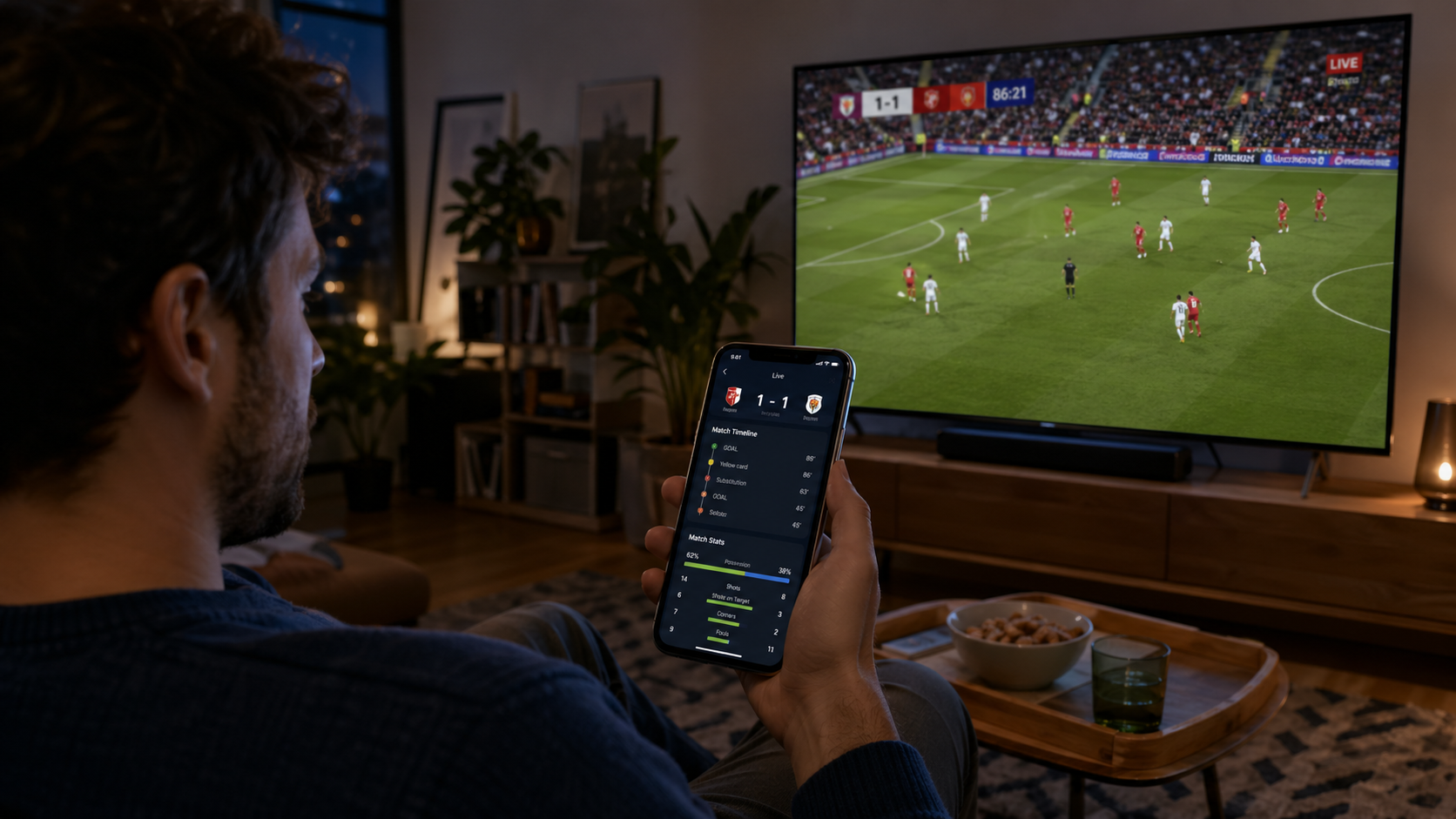
Alt: A man watching a live football match on TV and checking betting on his smartphone
Video streaming is changing how audiences consume sports content in 2026. The shift is visible in media rights deals, sports apps, and live data partnerships. In a market where users also follow platform access updates through terms such as bizbet app, viewers no longer depend only on scheduled TV broadcasts. They follow games through mobile screens, live feeds, match trackers, and short video updates.
A clear example came in January 2026, when FIFA selected Stats Perform as its first official distributor of betting data and live-streaming rights for selected competitions, including the 2026 men’s World Cup. The agreement covers official data, live streams, scores, player statistics, and match trackers for licensed sportsbook clients.
For the betting sector, this points to a wider change. Sports video is no longer just a broadcast product. It is becoming part of a bigger screen experience where live data, timing, and match context sit closer together.
Mobile screens change the viewing rhythm
The biggest change is how people move between formats. A user may start with a short clip, open a live stream, check the score, and then follow match data during key moments. In mobile-first environments, where products such as the 1xbet app also depend on quick access to live context, this creates a less linear viewing habit than traditional TV.
Streaming also gives sports media groups more space to test new formats. Some broadcasts now include extra statistics, alternative camera angles, live graphics, and shorter updates made for mobile viewing. In betting-related coverage, this matters because live decisions often depend on fast context rather than the final score alone.
DAZN’s agreement to acquire ViewLift for about $100 million in April 2026 also shows how much value sports companies now place on streaming infrastructure. ViewLift powers platforms for sports teams and regional sports networks, while DAZN is looking to strengthen its position in sports streaming.
What viewers expect now
Sports audiences are becoming used to faster access and richer match coverage. A stream is expected to do more than show the game. It also needs to support quick updates, clean navigation, and useful context around the event.
The most visible expectations include:
- Live video that works well on mobile devices
- Match trackers placed close to the stream
- Short clips built around key moments
- Faster score and statistics updates
- Easier switching between live and replay content
These habits are changing how sports platforms plan their products. The full match still matters, but it is no longer the only format that keeps attention.
How streaming changes sports content
Before the table, it is important to separate the two ideas. Streaming is not only a new delivery channel. It also changes how sports content is packaged and used during the event.
|
Area |
Older model |
Current direction |
|
Main viewing format |
Scheduled TV broadcast |
Live stream plus extra formats |
|
Match context |
Added before or after games |
Shown during the event |
|
Mobile use |
Secondary screen |
Main viewing option for many users |
|
Highlights |
Posted after the match |
Shared during and soon after key moments |
|
Data use |
Separate stats pages |
Closer to video and trackers |
Betting coverage follows the same shift
The betting segment is closely tied to this change because live sports content affects how users read events. When official data and video feeds are placed closer together, the match becomes easier to follow in real time.
This does not mean every stream turns into a betting product. It means sports media and betting technology now share some of the same needs: fast feeds, stable video, accurate data, and mobile-friendly layouts.
More flexible sports screen
The direction for 2026 is clear. Sports streaming is becoming more flexible, more data-led, and more focused on mobile use.
For audiences, the result is a different way to follow sport. A match can be watched, checked, paused, replayed, and tracked across several formats. For betting-related platforms, this creates a stronger link between live content and real-time context, without changing the basic role of sport itself.